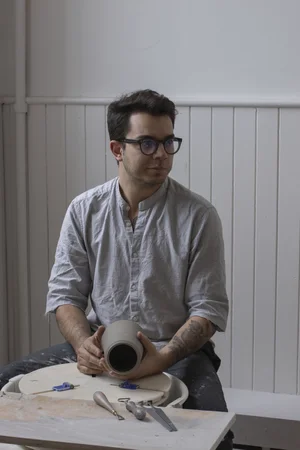
My first journal, and a first firing.
A New Journey, and Why I'm Finally Starting to Write
I have wanted to keep a journal for a long time. I never quite found the right moment to start, or perhaps I was waiting for the right reason. This feels like it.
Over the last few months, thanks to the Inches Carr Bursary awarded by Craft Scotland, I have been able to pursue something I had been wanting to do for years: wood firing. It sounds simple when I put it like that, but the truth is that the day to day running of the studio has a way of consuming all of your time. The things you want to explore, the doors you mean to knock on, the experiences you keep telling yourself you will get to eventually all pile up quietly in the background while you keep your head down and get on with it.
My interest in wood firing started with a small faceted jar. It was made by Jan Hajek, who I used to share studios with back in 2019, and I bought it years ago. I still have it and I still love to look at it often. There is something in those surfaces that an electric kiln simply cannot produce. The way ash settles, the way flame leaves its mark differently on every single piece, the sense that something happened in that firing that you could not have fully planned for. I found that beautiful and I wanted to understand it from the inside.
I even tried to get there through Sylwia, my former teacher at MudStation, who I chased for years offering to simply help out. Splitting wood, making coffee, whatever was needed, just to be part of a firing and learn. Then Covid arrived and those plans dissolved along with so much else. After that I made occasional attempts to connect with groups wood firing in Scotland, but it never quite worked out, and eventually the studio swallowed those efforts too.
The bursary changed that. It gave me the time, the funding, and really the permission to stop and pursue this properly.
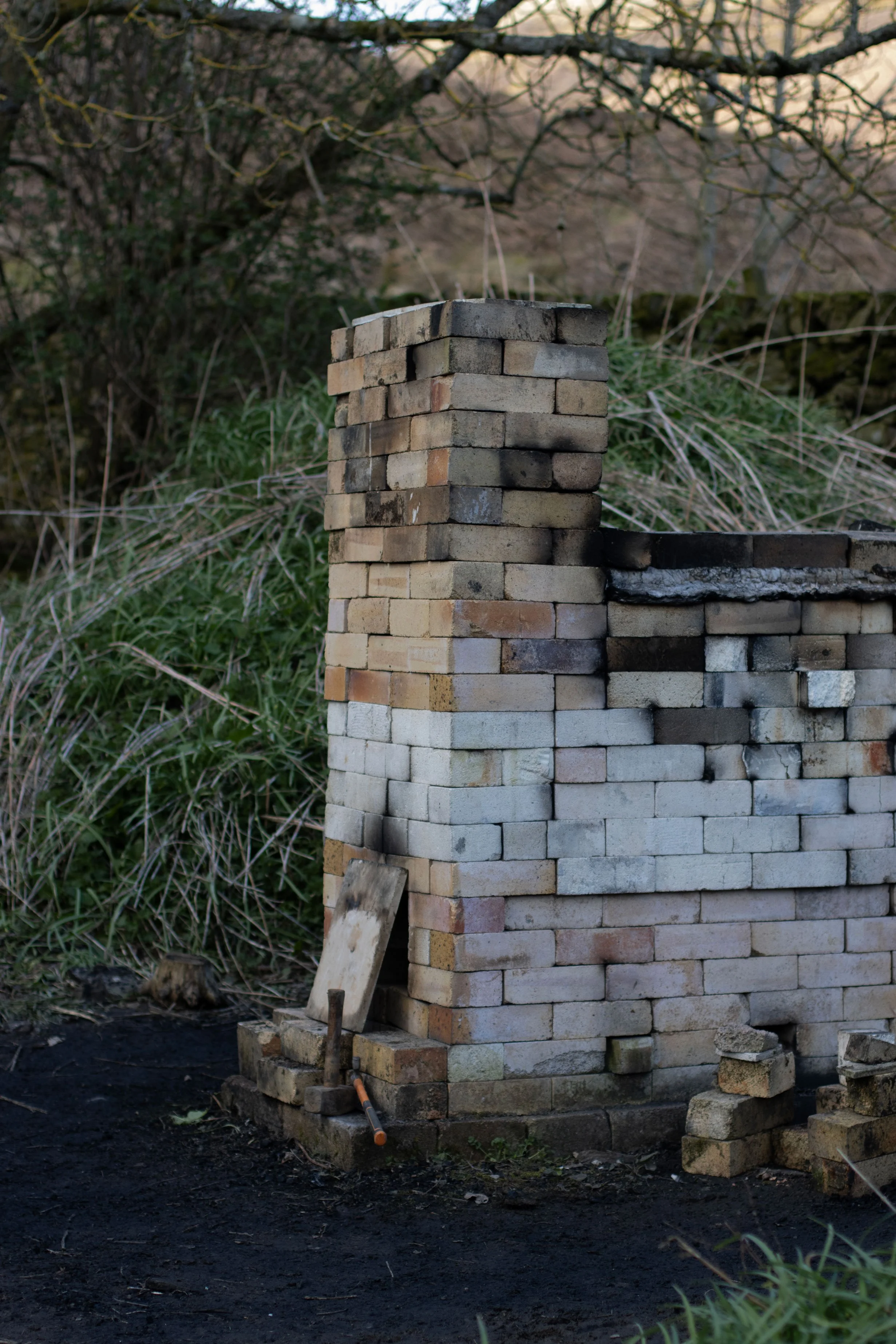
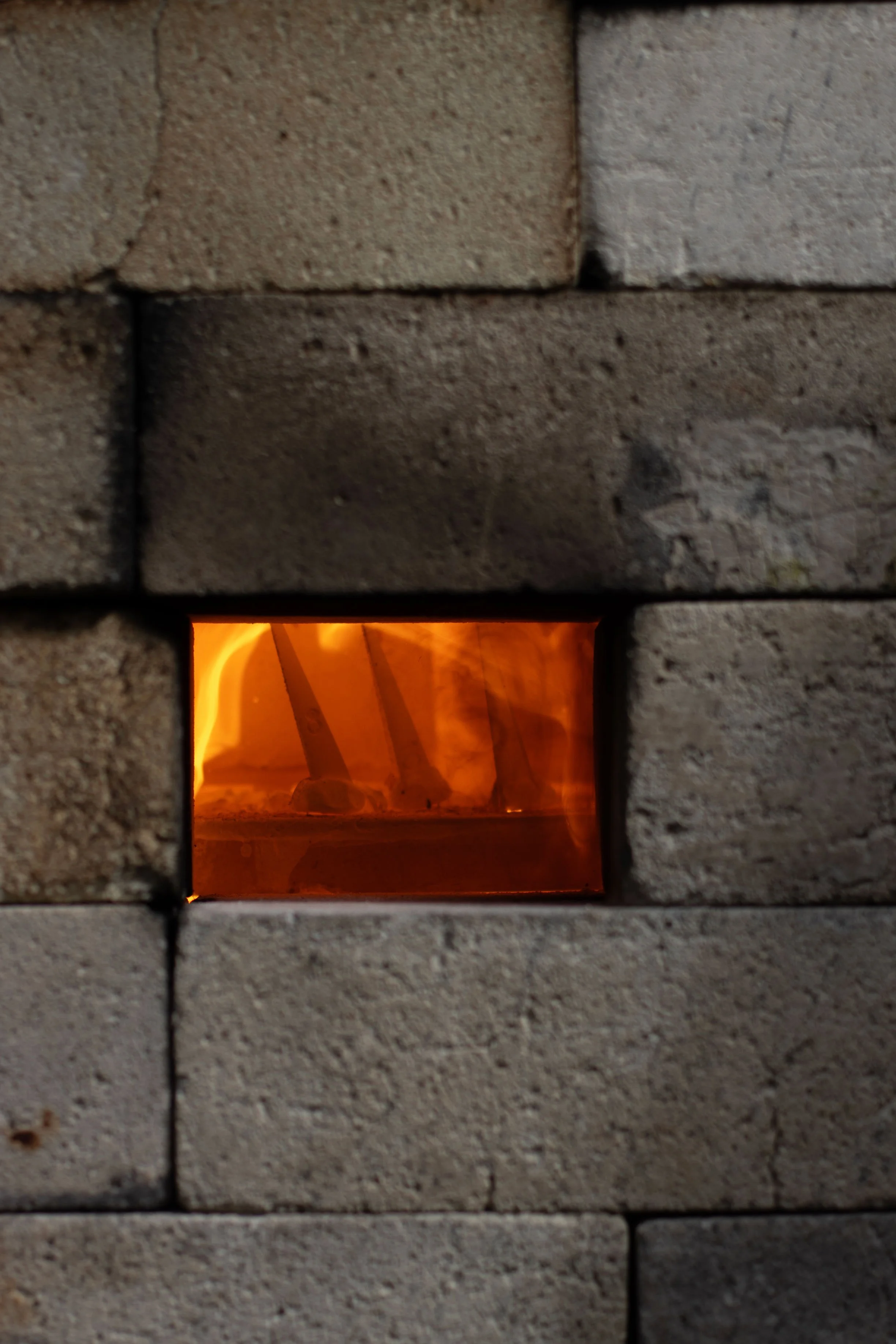
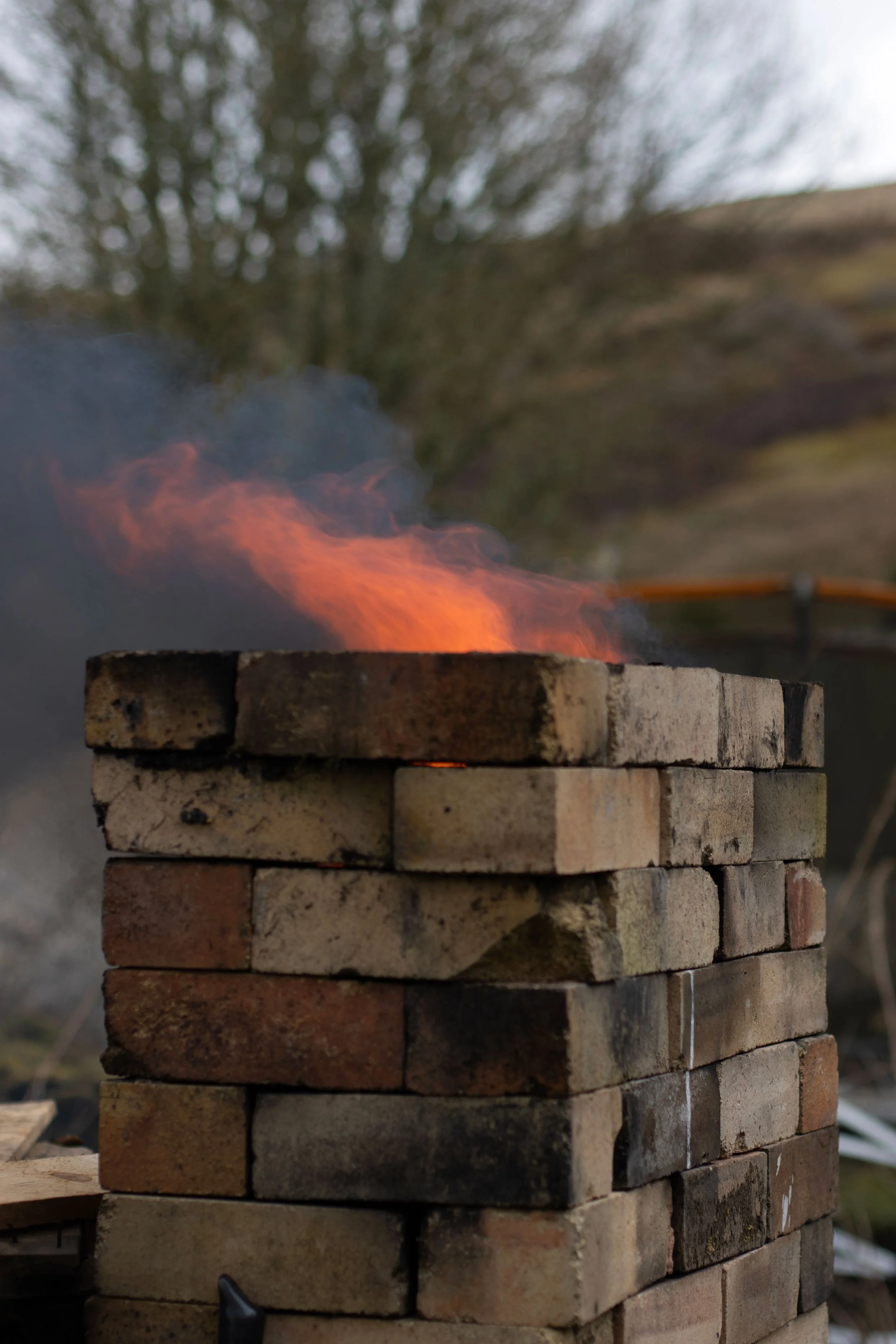
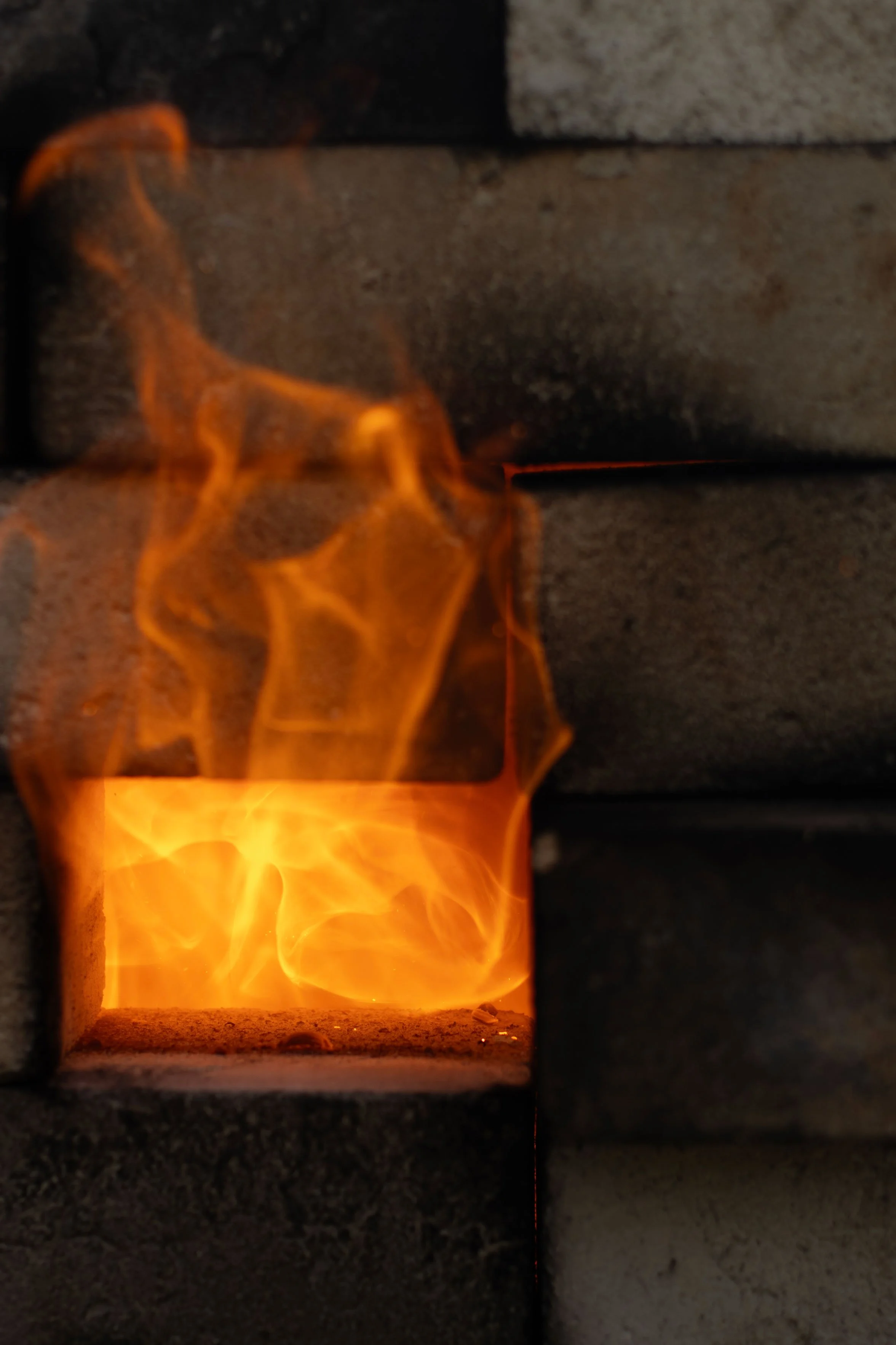
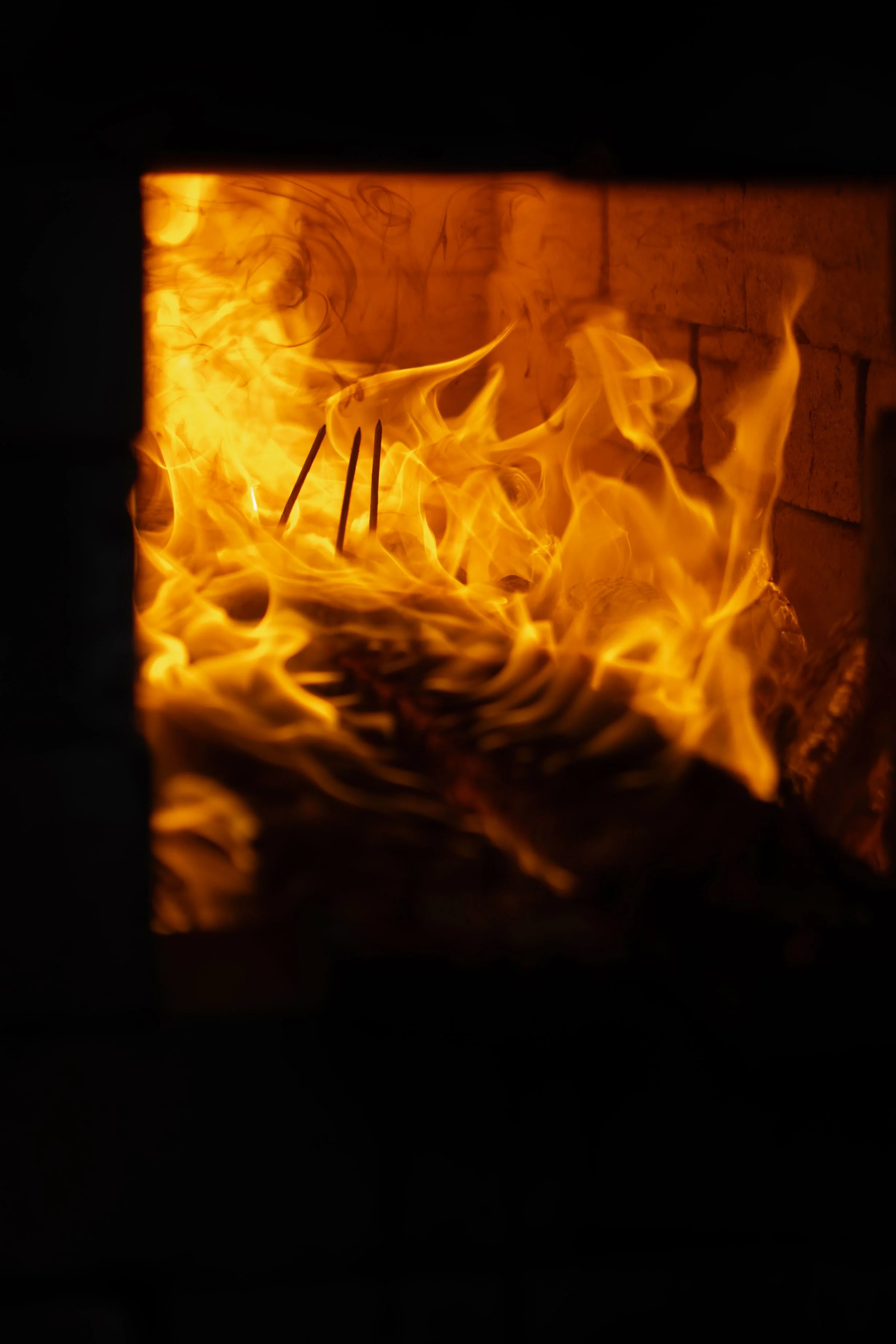
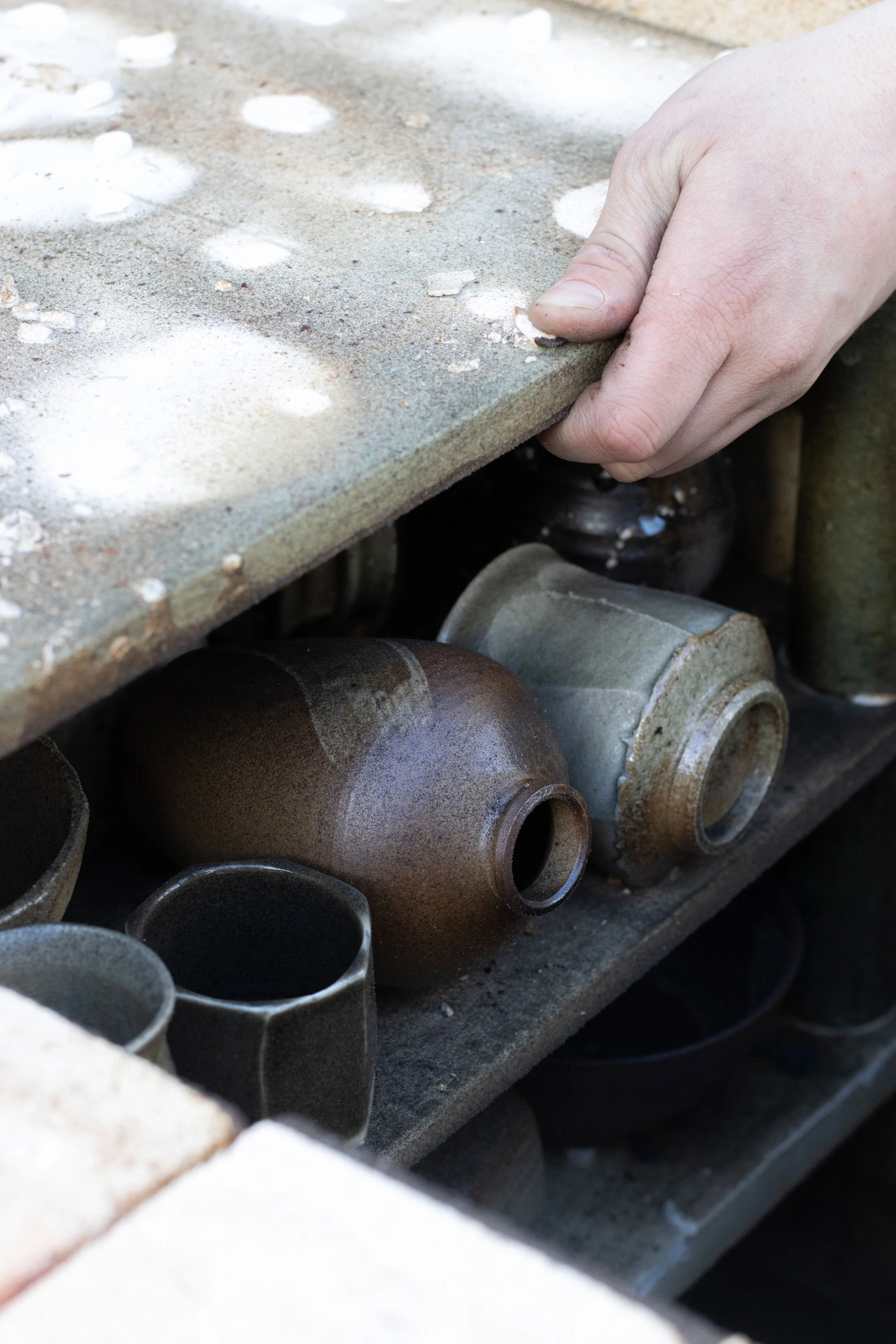
I began in March, preparing pieces and testing clays and glazes for a fast firing course in the Scottish Borders with George Perry. That first firing was mixed, some things worked and some things didn't, but it gave me enough information to commit to a direction. I settled on a heavy reduction clay body and a traditional Japanese shino glaze, which reacts to the flame beautifully, and began making pieces with the long Anagama firing in mind: thicker, more rustic work, bigger and more complex than what I usually make. I spent time looking back into tradition and my roots, and hoping to make with my curiosity, pieces I grew up around but had overlooked in the past.
The main firing took place at the beginning of June at Wytham Woods in Oxford. The kiln is an Anagama built in the style of traditional Thai kilns, curved and requiring a wooden support structure that is burned away in the first firing. It was built and run by Svend, who at 80 years old brought 57 years of experience to the whole process. He is the best disciple Michael Cardew had in the 1960s, and after that he travelled to East Asia to research Anagama kilns, which weren't present in the UK at the time. He now teaches two or three times a year, how to fire these kilns and sometimes how to build them.
We arrived on the Wednesday. The morning was spent glazing pieces on site, and then we began loading the kiln together. This is nothing like loading an electric kiln. Every piece has to be supported over wadding, and the placement of each one matters enormously. Brigitte, Svend's partner and an expert ceramicist in this matter, walked us through the positioning of everything, where each piece would sit, how it would face, what it would be near. Myself and the rest of the crew taking part in the firing - Andy, Eleanor, Jim, Lam, Nick and Sami - took turns to be inside the kiln loading the pots and learning about the whole process. The loading carried on into Thursday afternoon, after which Svend sealed the kiln with brick and clay to retain the heat inside.
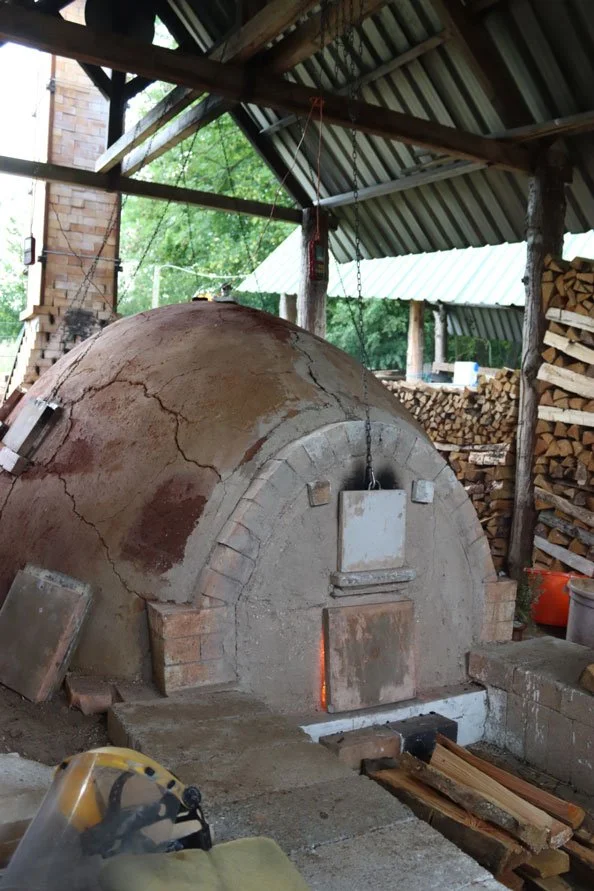
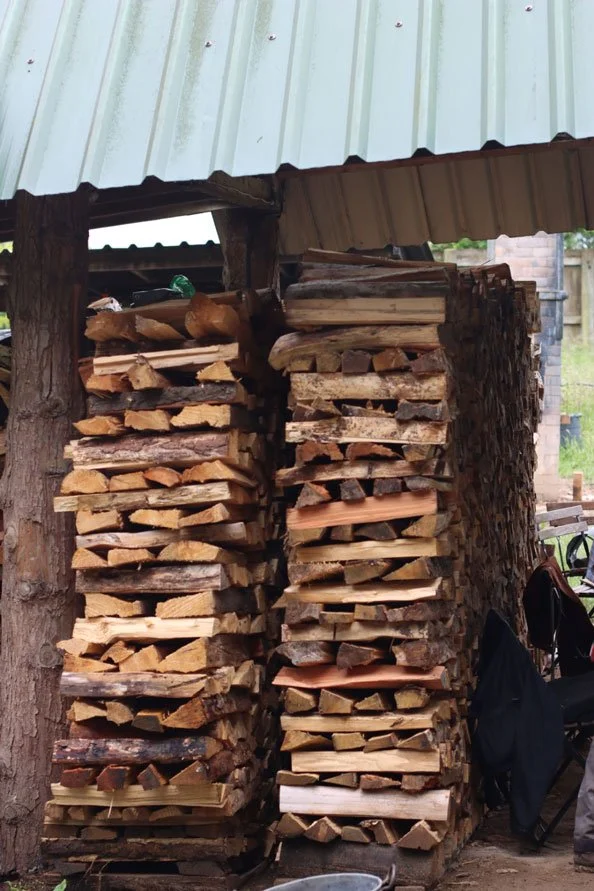
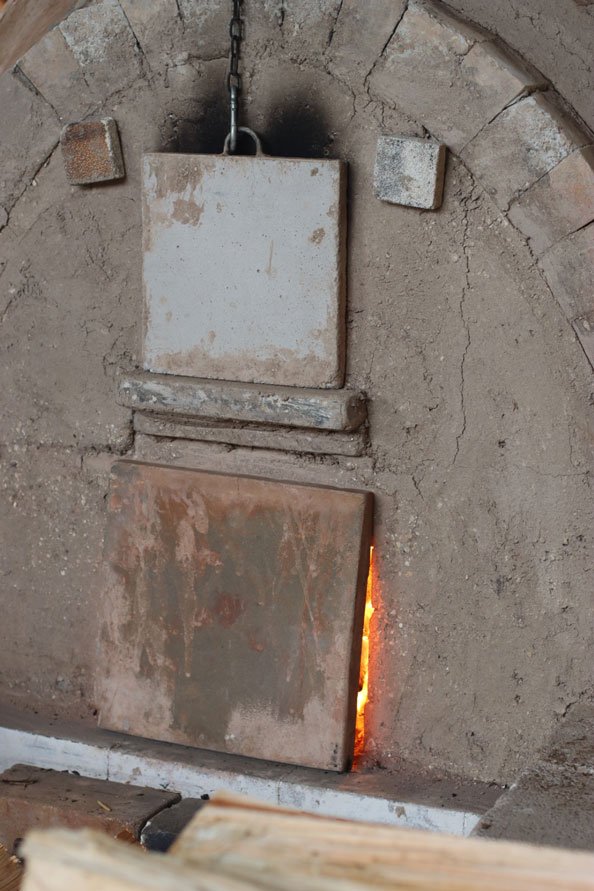
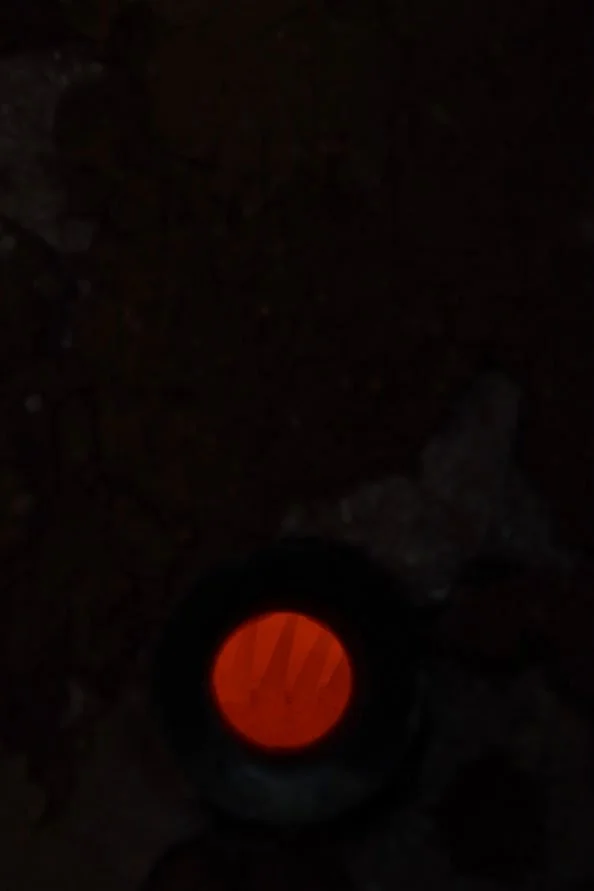
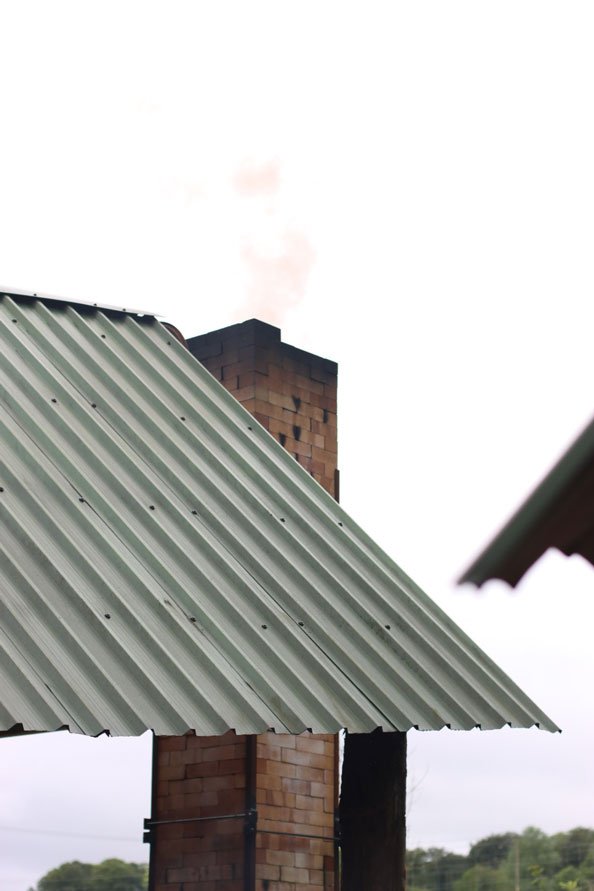
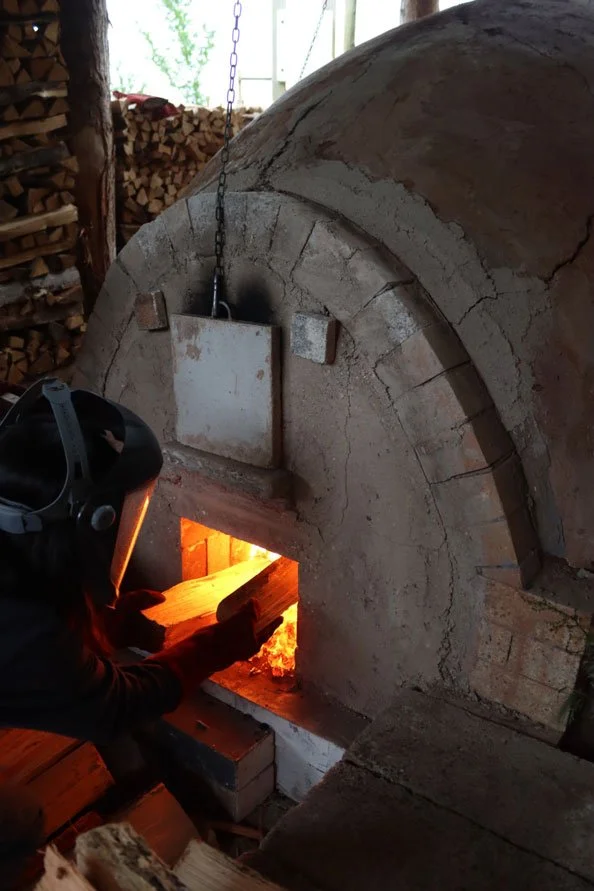
The firing itself ran in four-hour shifts, two people on each, with eight hours of rest in between. Svend supervised throughout. I was on the 6 to 10 slot, first shift Friday morning and then back again for the evening shift. During each shift, one person feeds wood through the stoking hole while the other prepares the next load. At around 900 degrees the process of reduction begins, where the flame starts to extract oxygen from the clay and glazes, producing the depth of colour and surface quality that makes wood-fired work so distinct.
As the firing progressed into the weekend, keeping the temperature climbing became increasingly difficult. This is where Svend's experience became genuinely essential. He fires by feel rather than by instrument, reading the kiln through the colour or the sound of the flames, the bending of temperature cones and the instinct built over decades. For the final four hours he kept coming back with adjustments on how we were stoking the kiln until the temperature reached where it needed to be, 1300 degrees celsius. We got there. The firing was successful.
What struck me throughout the weekend was how much of this is teamwork. An Anagama like this needs at least three experienced people or around six supervised beginners working together. You have to trust others to carry on what you started, to follow the temperature curve through their shift while you rest. You are working not just for your own pieces but for everyone's, and I came away with a much deeper understanding of why wood firing communities tend to be so close.
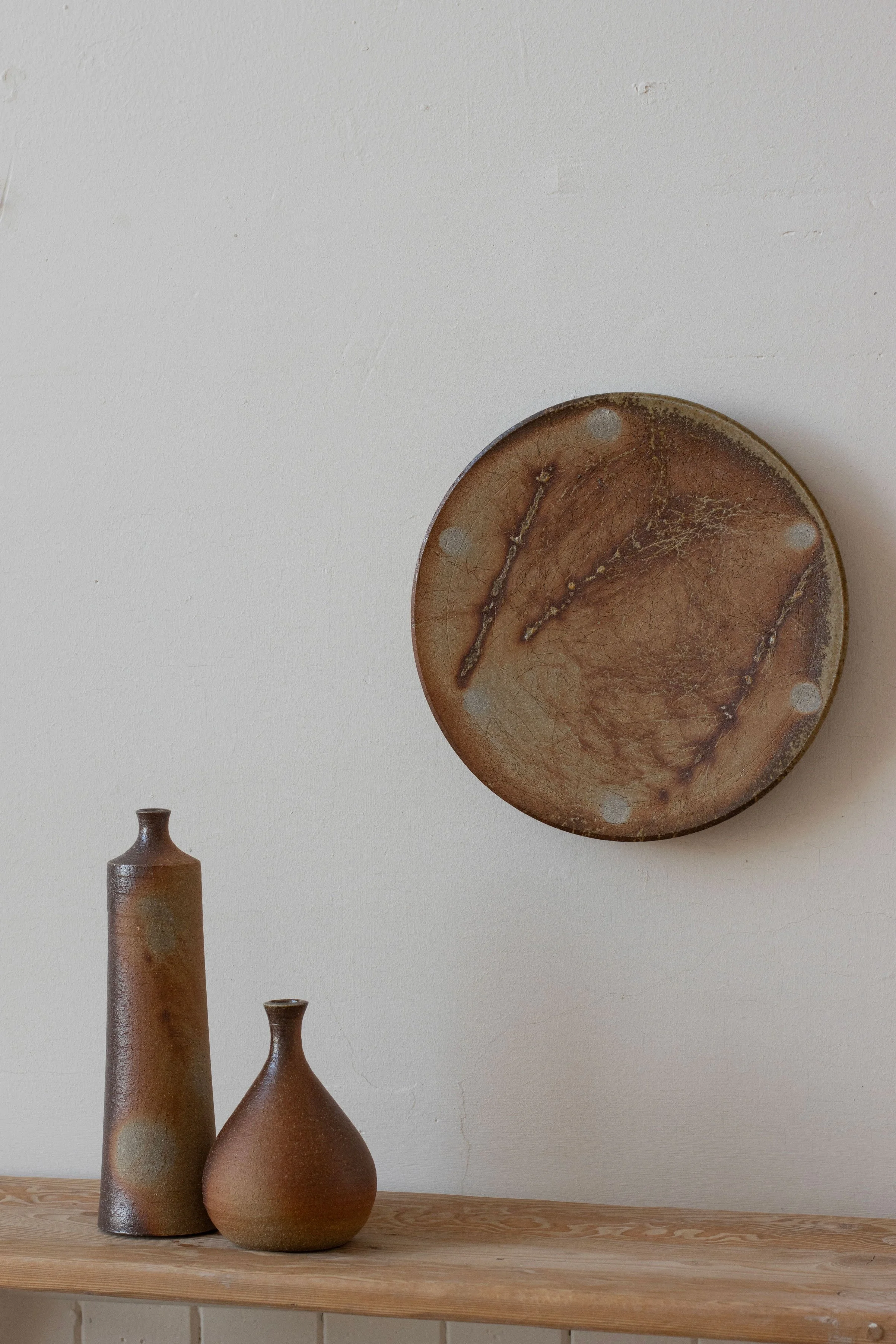
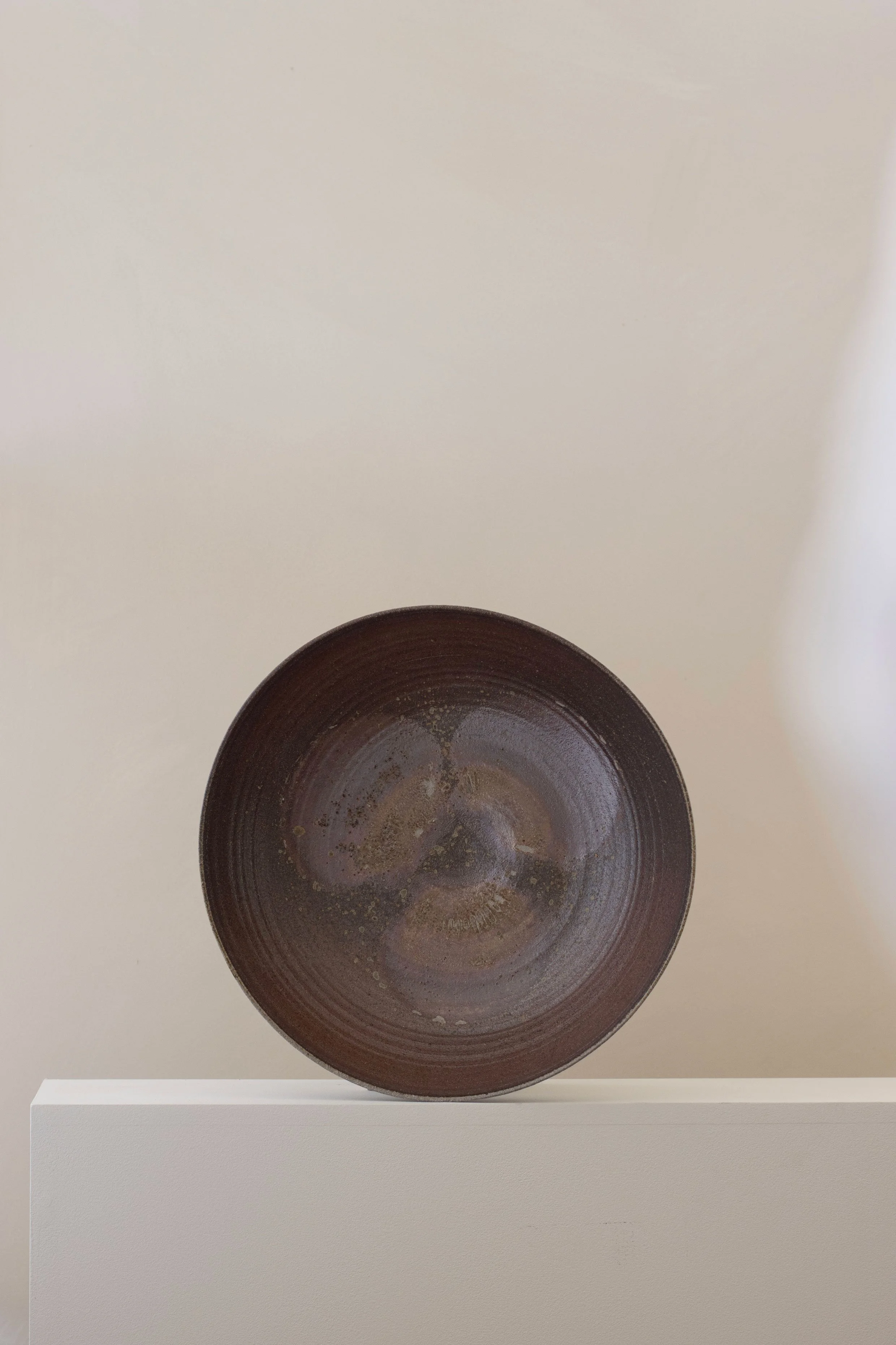
We returned on Sunday the 14th of June to open the kiln. We unloaded it together, forming a chain and passing pieces back to tables where they were laid out in order, then gathered to assess everything. Where the ash had deposited, how the positioning had affected each piece, how dramatically different the results were from one part of the kiln to another. Some pieces were heavily ashed, others showed more flashing from the flame, and some had been placed with mare's tail or shells, which leave small organic impressions in the surface.
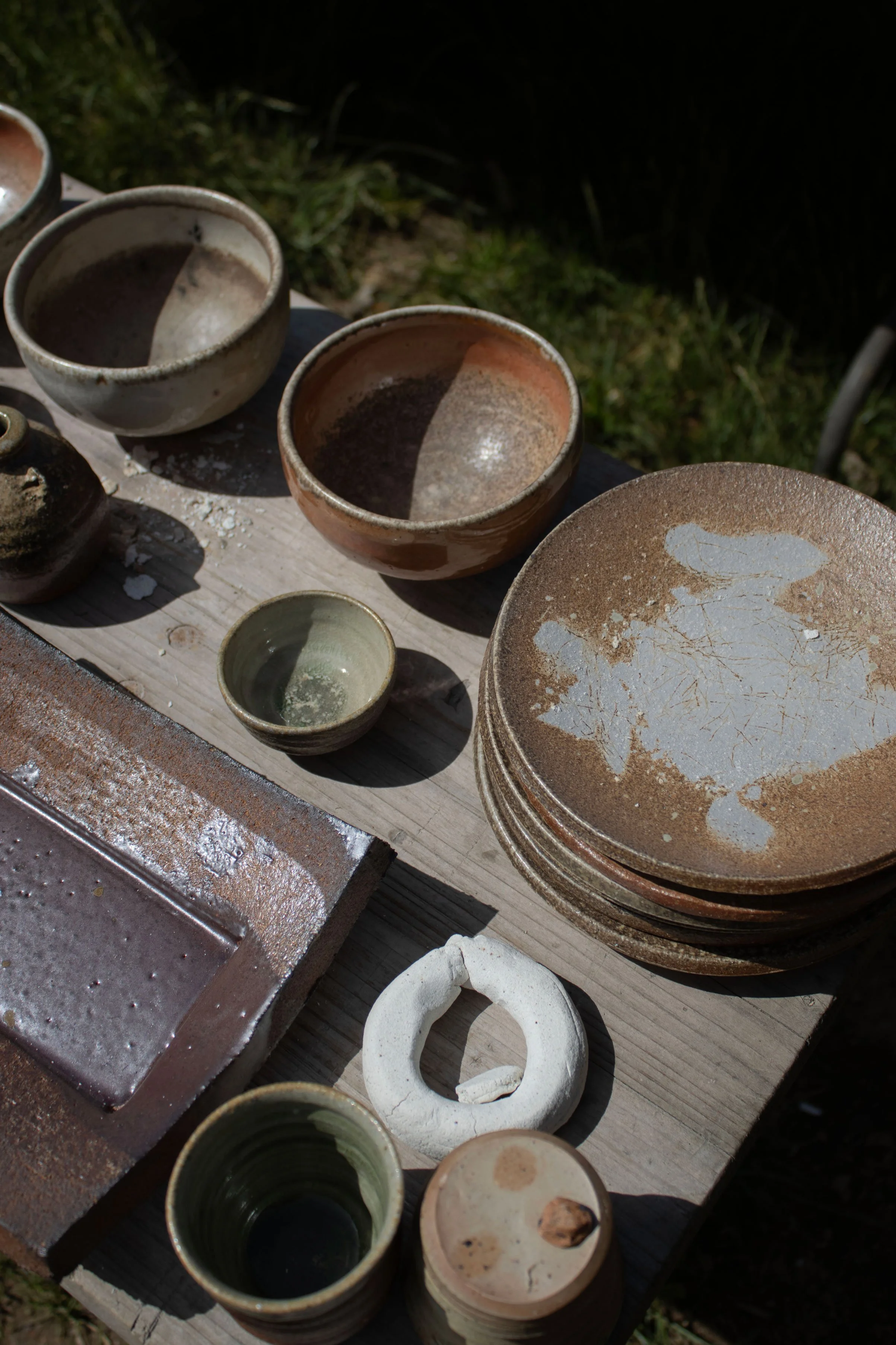
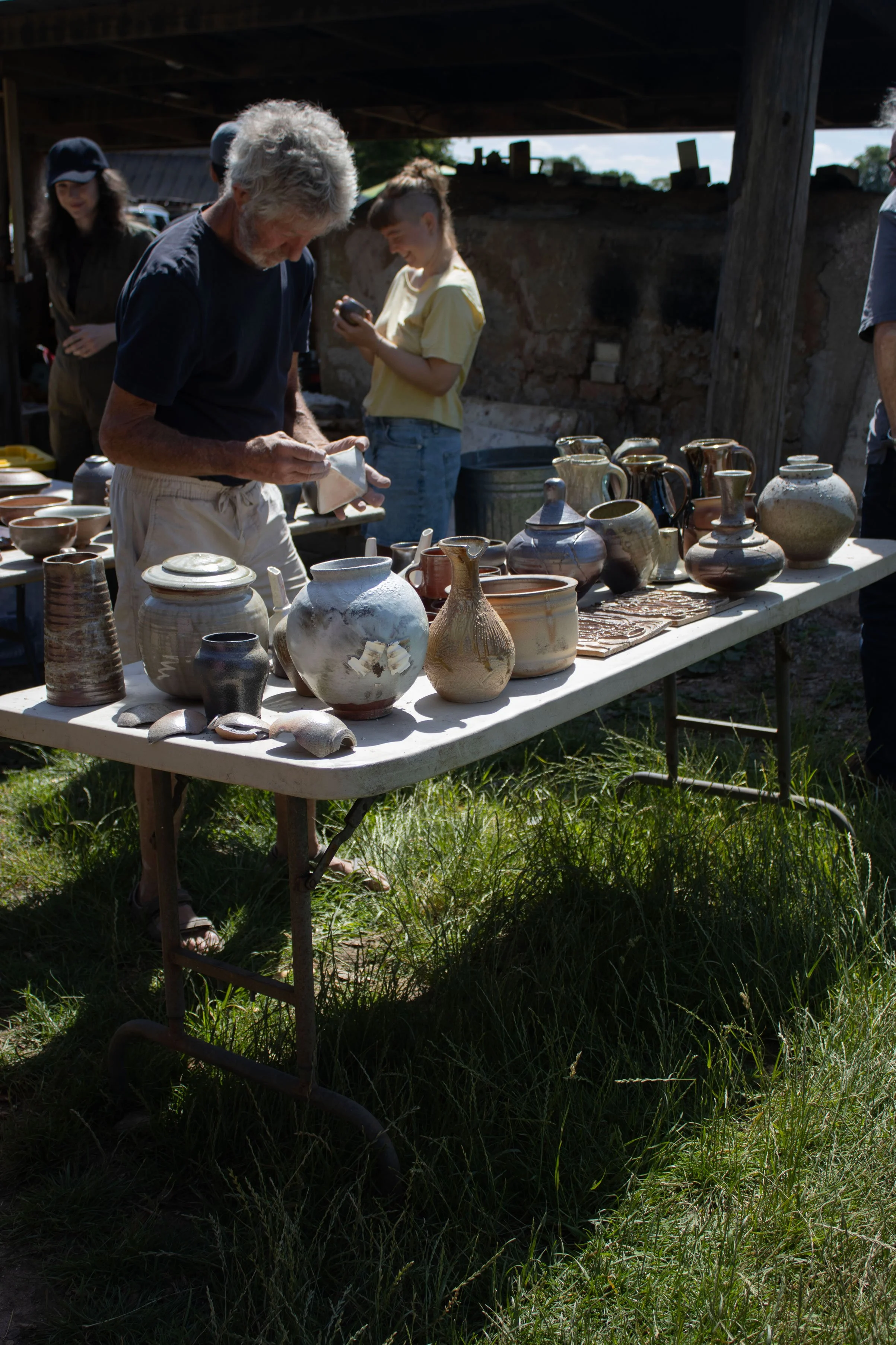
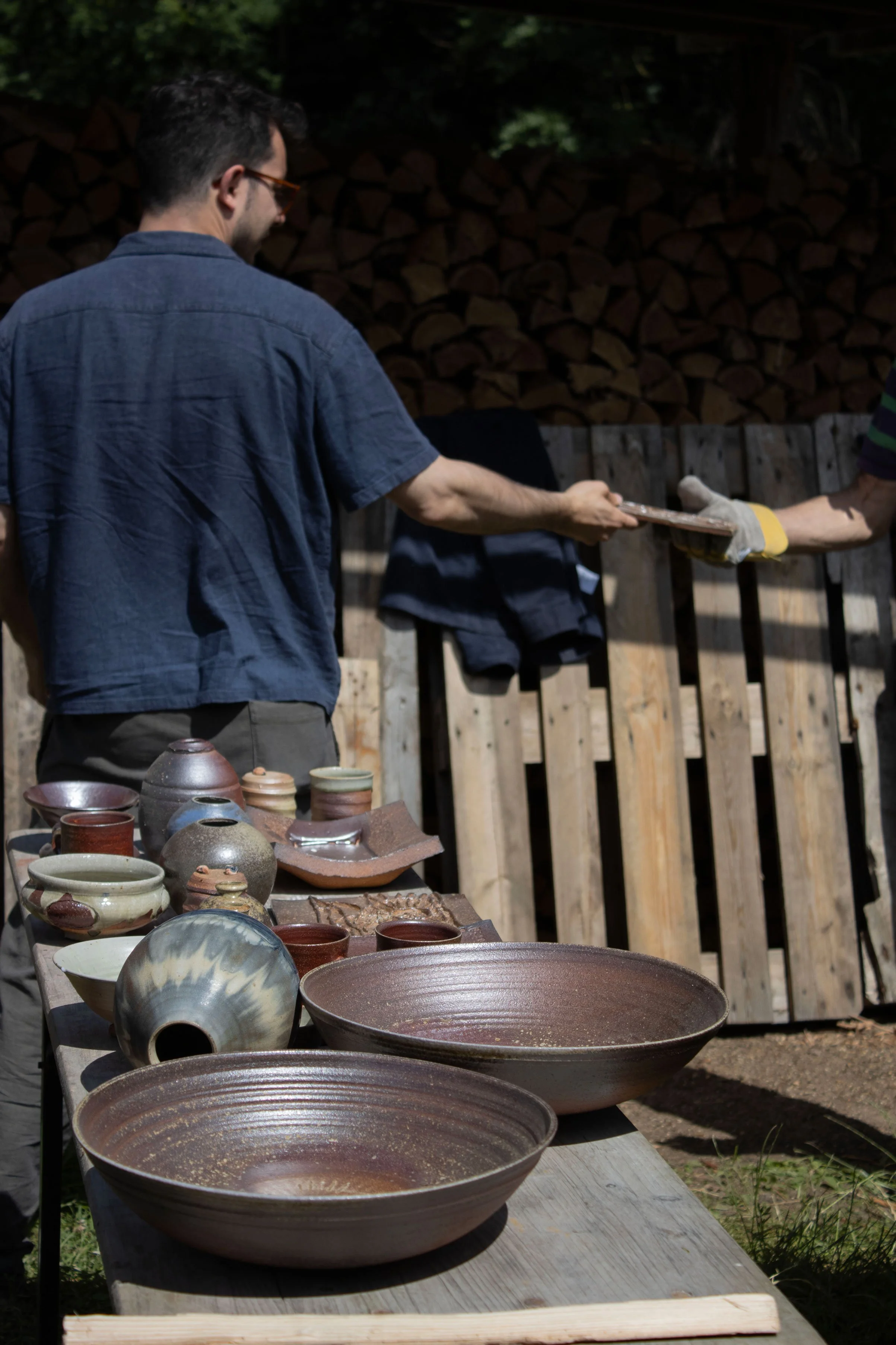
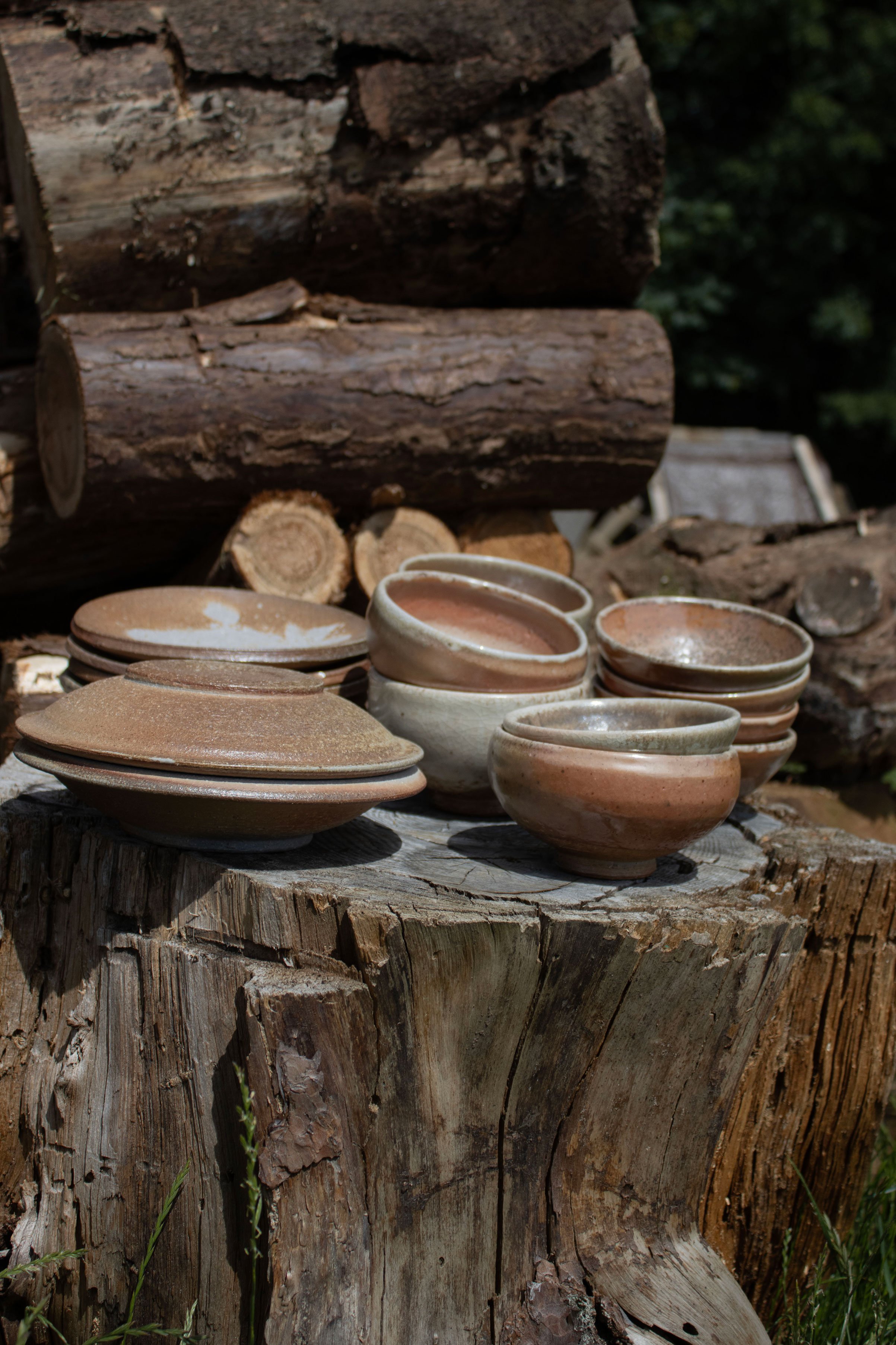
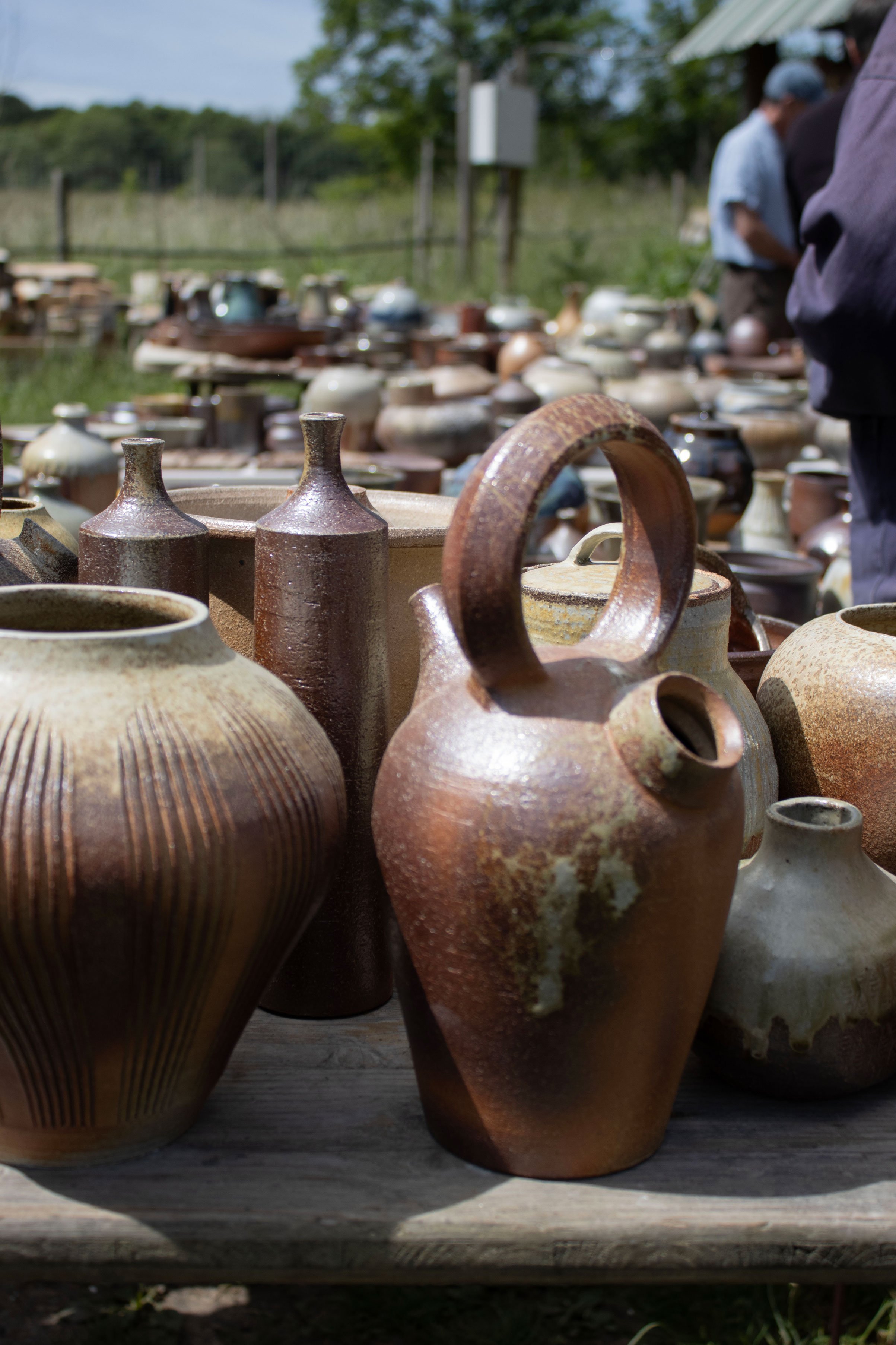
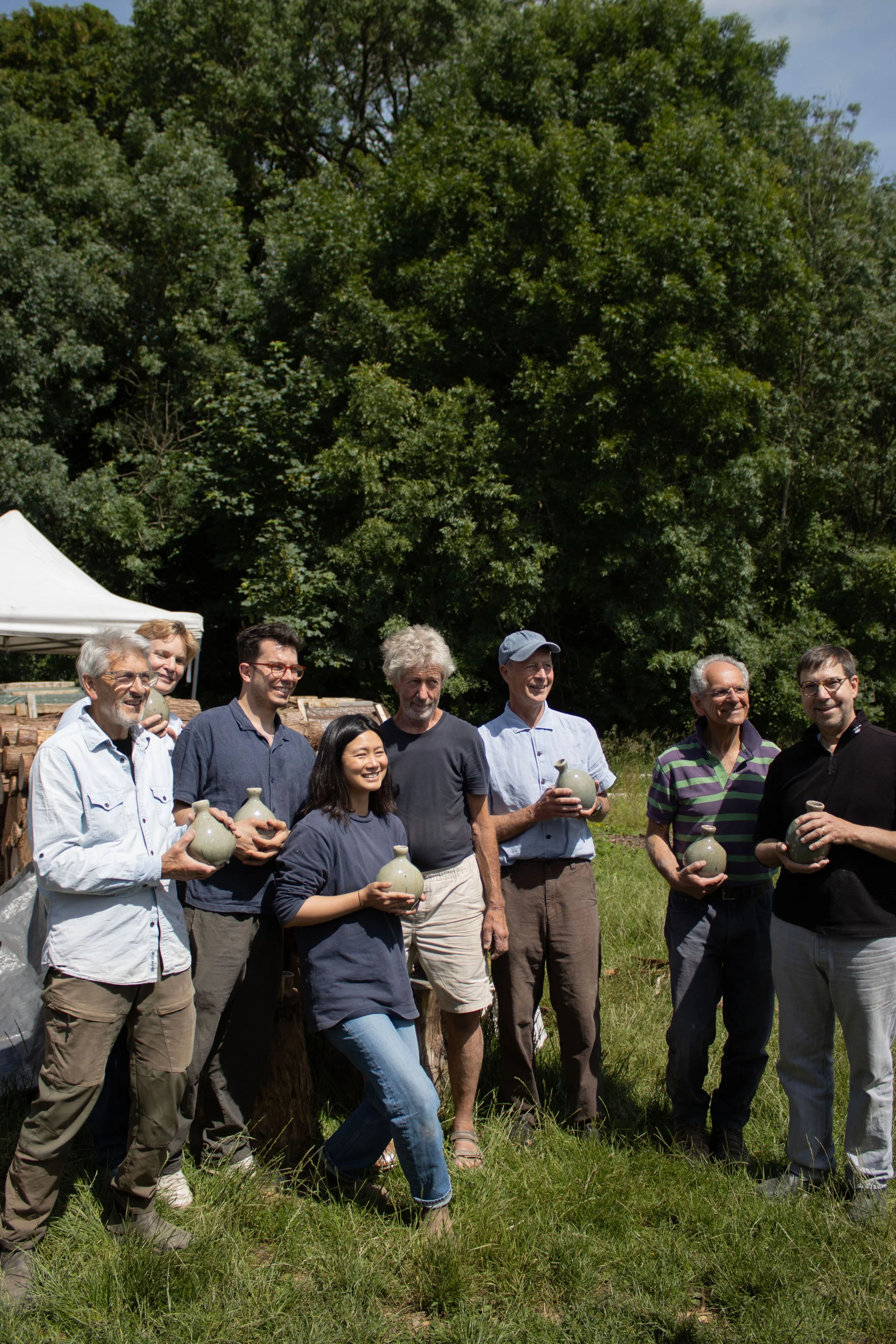
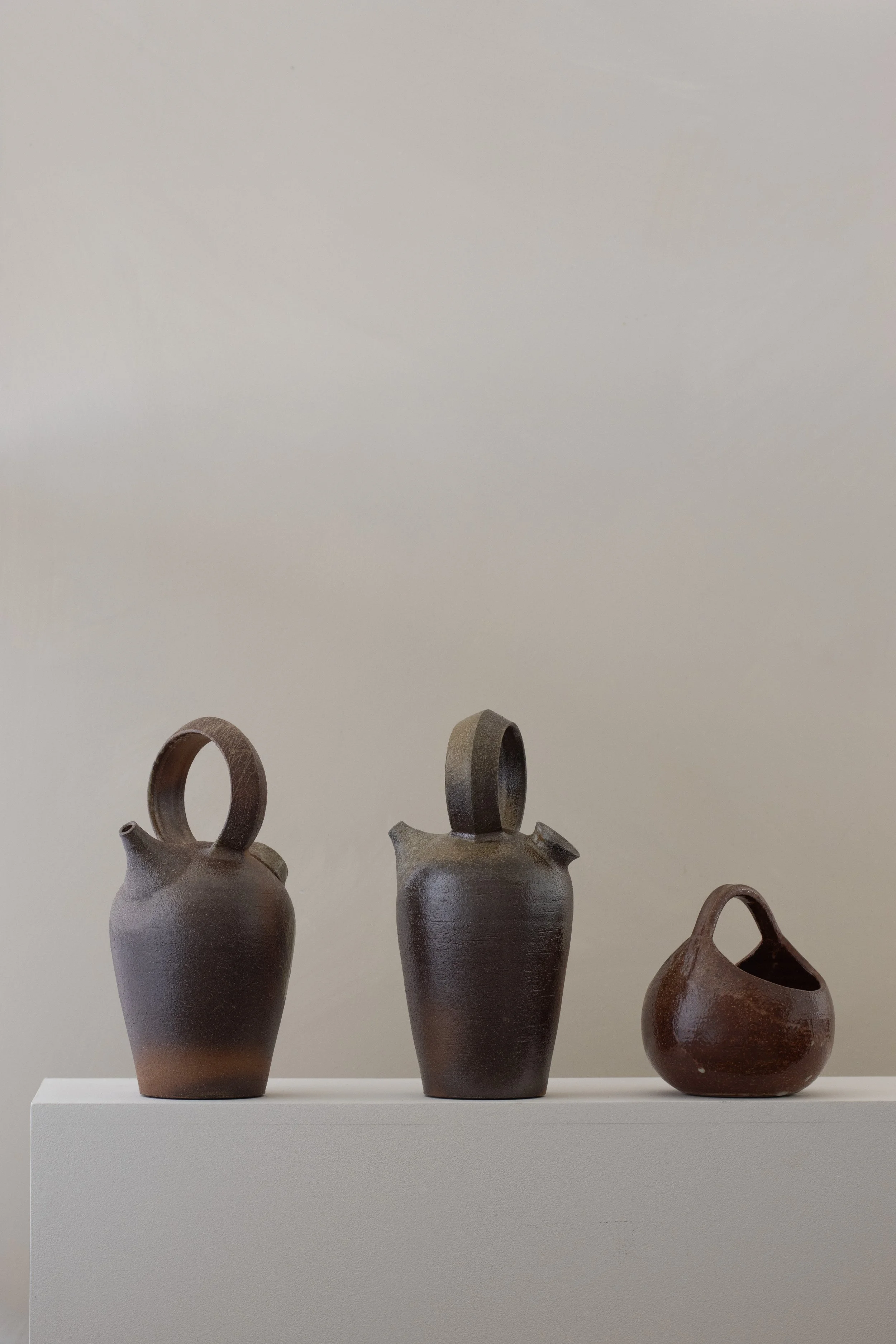
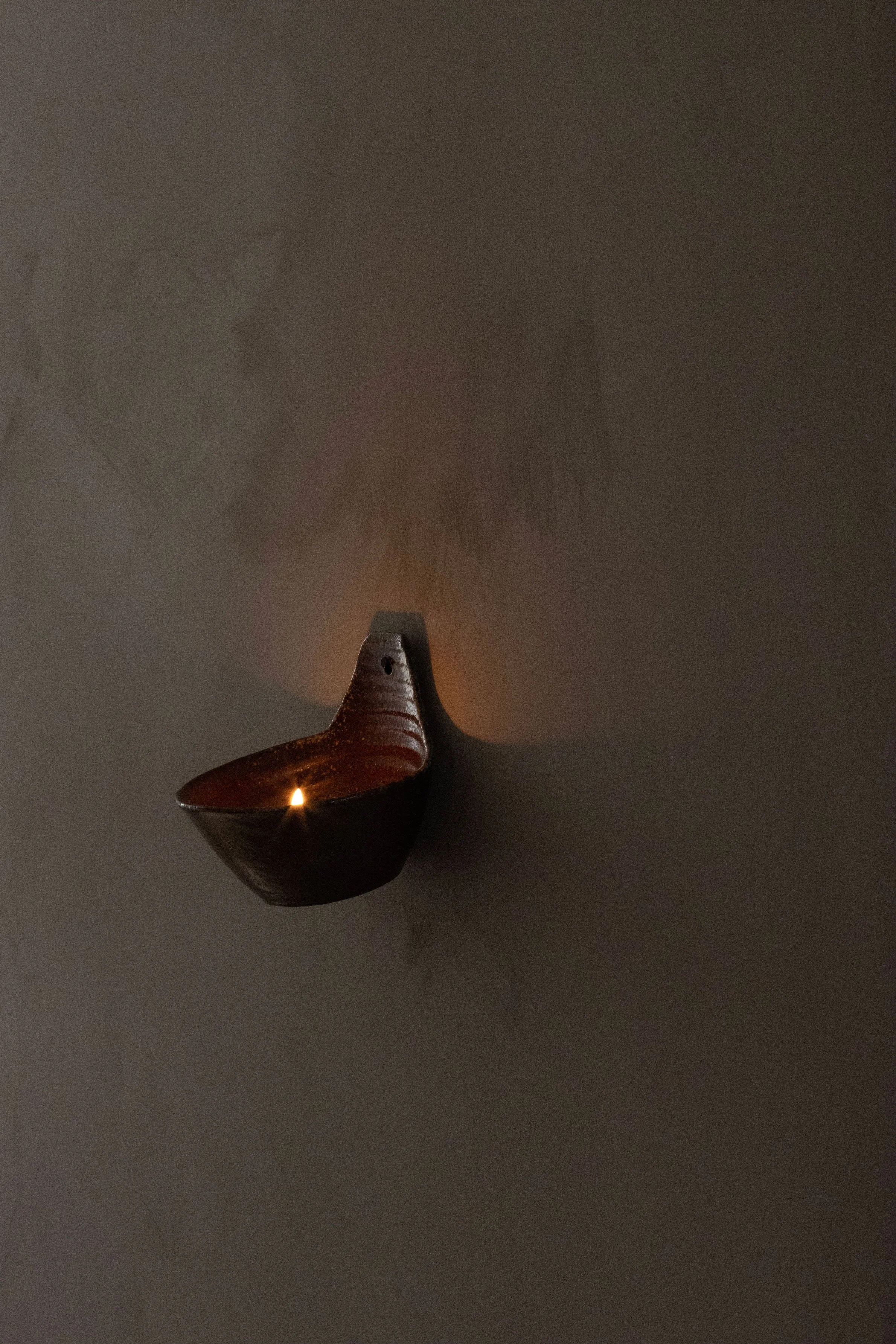
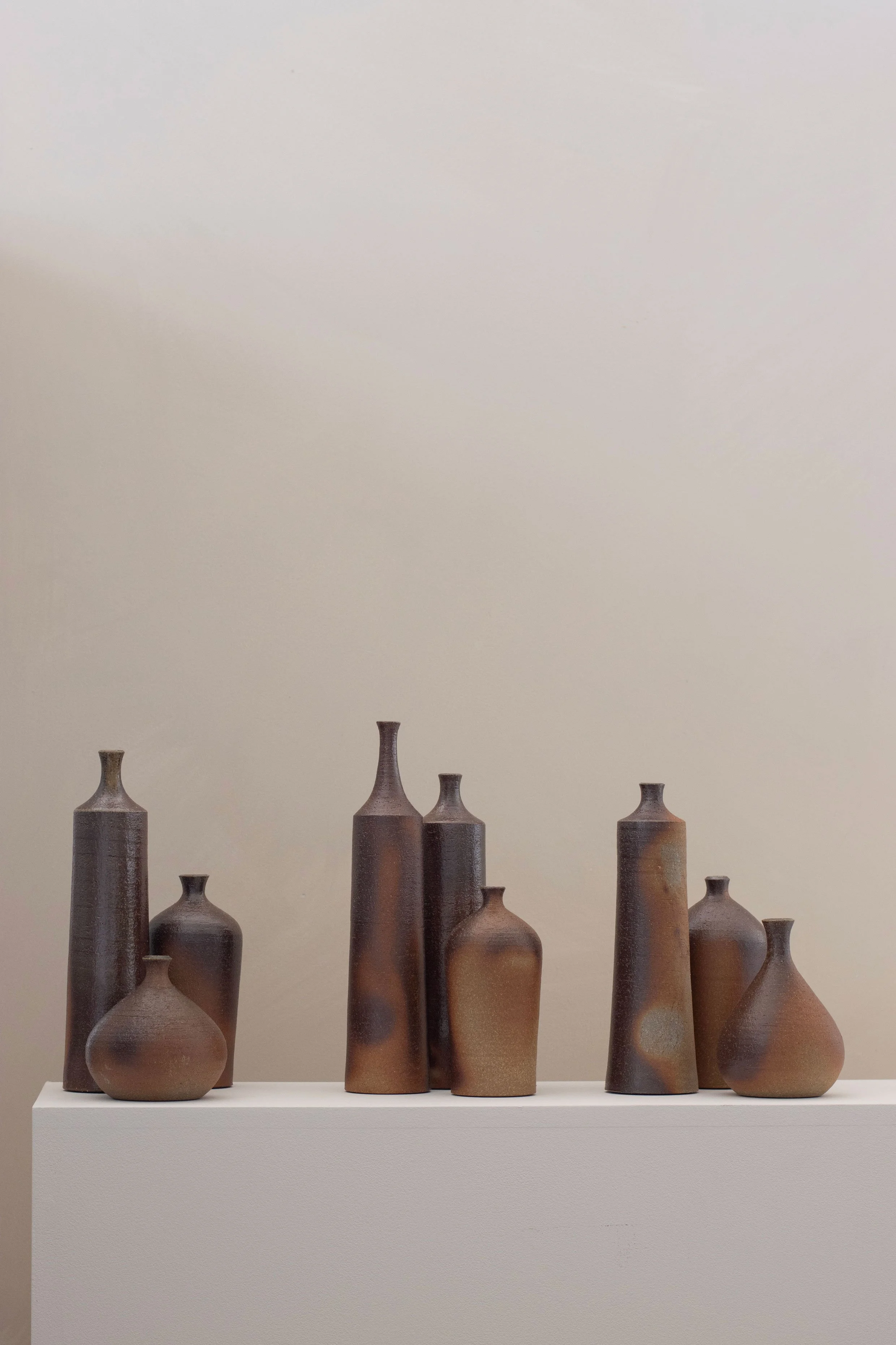
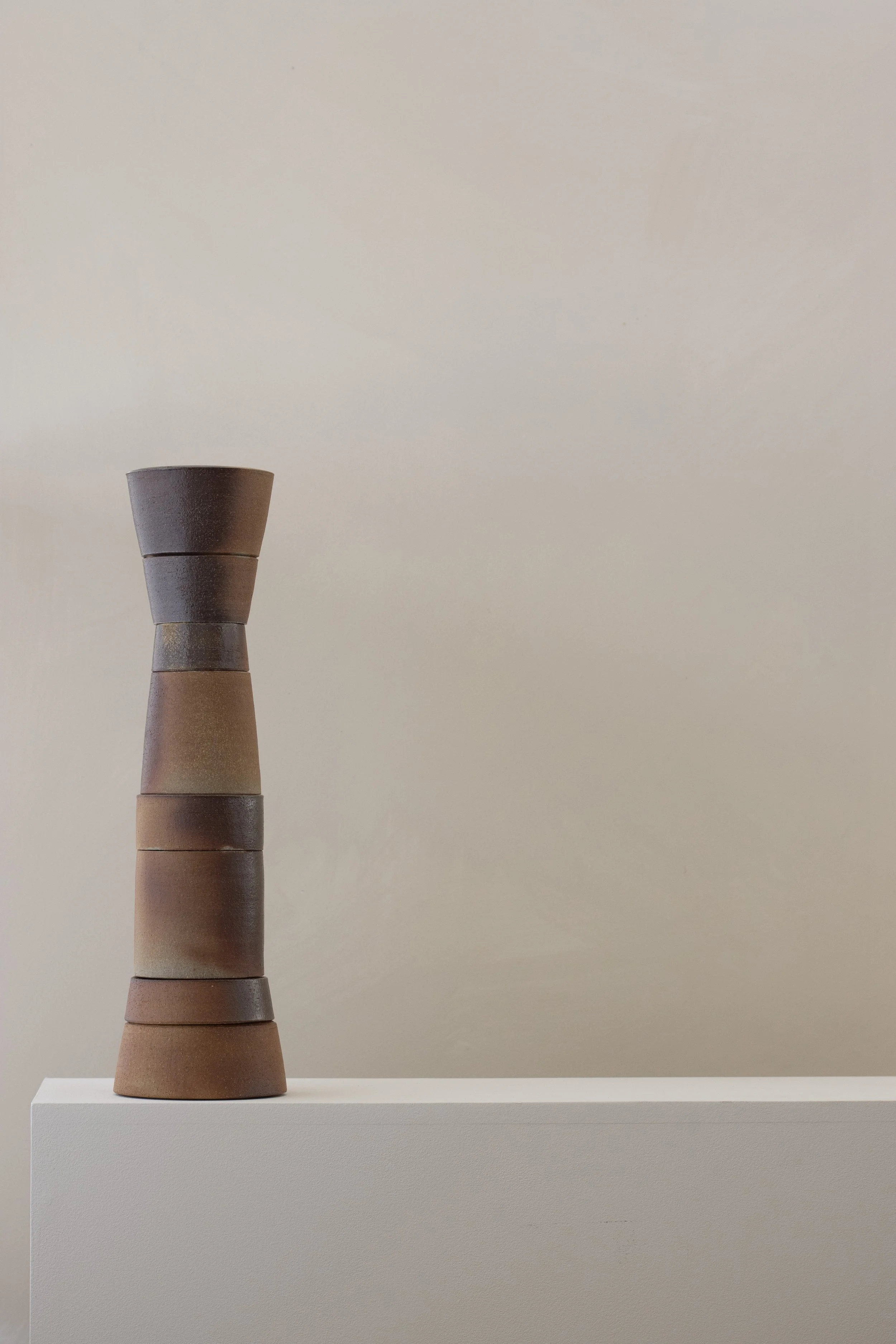
Overall, the pieces were beautiful, dramatic and complex, each one different from the next in ways I could not have planned for. The thick and rustic forms I had made, the traditional Botijo (Spanish water vase) I had made a version of, the wall pieces, the small bottles and vases, the large bowls, they all held the effects of the firing really well, and I have spent the days since going back to look at them again and again.
What I didn't fully anticipate was how much this experience would reignite things for me creatively. My work tends toward the calm and minimal, and seeing those quiet forms come out of the kiln with all that surface complexity and unpredictability genuinely excited me. Each piece is different. None of them could have been made any other way.
So this is the beginning of a new line of work which I hope coexists with my usual work you have come to known for years, and also finally the beginning of this journal. I want to use it to document where things go from here, the making, the research, the firings I hope will follow, and the bigger and more ambitious pieces I have started thinking about. There is a lot I want to explore and I think writing it down as I go will help me understand it better.
Thank you for reading. More soon.
x, Borja